When people first see a Dragon Tooth amethyst, the reaction is almost always the same: curiosity followed by fascination. The crystal looks ancient, almost mythical, with its elongated shape and sharply defined point that truly resembles what its name suggests — the tooth of a dragon. In the mineral market this formation is often referred to as Phantom Amethyst, but internationally it has become widely known as Dragon Tooth Amethyst, a name that captures both its appearance and the sense of mystery surrounding its formation.
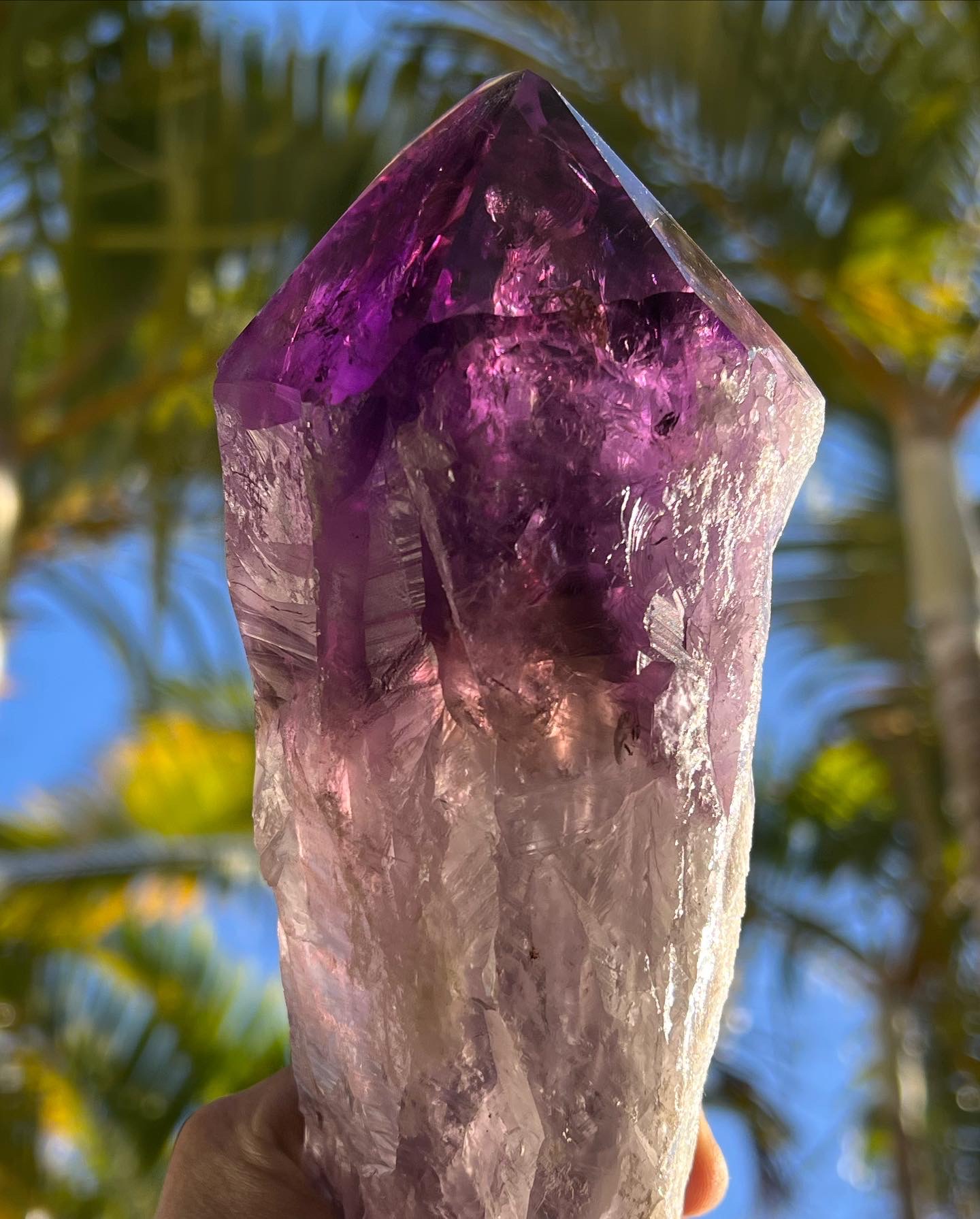
Like all amethyst, Dragon Tooth crystals belong to the quartz family and are composed of silicon dioxide (SiO₂). Their distinctive purple color comes from trace amounts of iron within the crystal lattice that were later exposed to natural geological radiation over long periods of time. At certain stages of crystal formation, the deposition process can be temporarily disrupted by shifts in environmental conditions or the presence of impurities within the surrounding medium. During these pauses, crystal growth halts briefly, and a thin layer of foreign material may develop, or the composition and temperature of the environment may simply shift in ways that alter how the crystal continues to form. Once favorable conditions return, amethyst crystal growth resumes, building new layers of material on top of what had already been deposited. When this occurs and produces color variations in triangular shapes within the crystal, we call them phantoms.
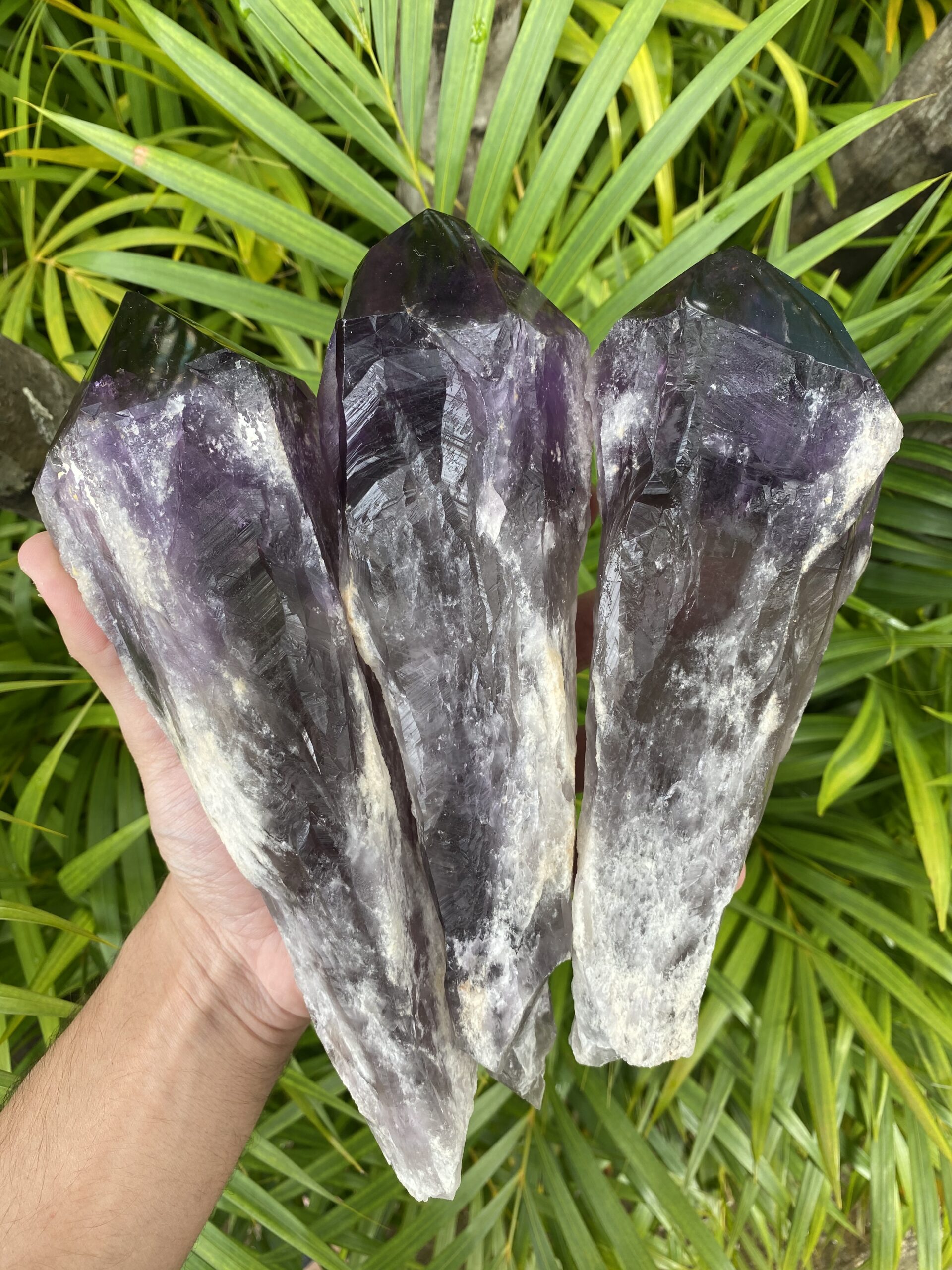
Dragon Tooth amethysts are especially recognizable because of their shape. Unlike amethyst clusters that grow in groups on a matrix, these crystals often form as single elongated points. The structure is typically narrow and tall, sometimes showing natural steps or layered textures along the sides of the crystal faces. Many specimens also display fascinating color transitions. It is not unusual to find pieces that begin with clear quartz at the base, gradually shifting into smoky quartz tones before reaching the deep purple amethyst point. This natural combination of quartz varieties gives the crystal depth and character, making every piece unique.
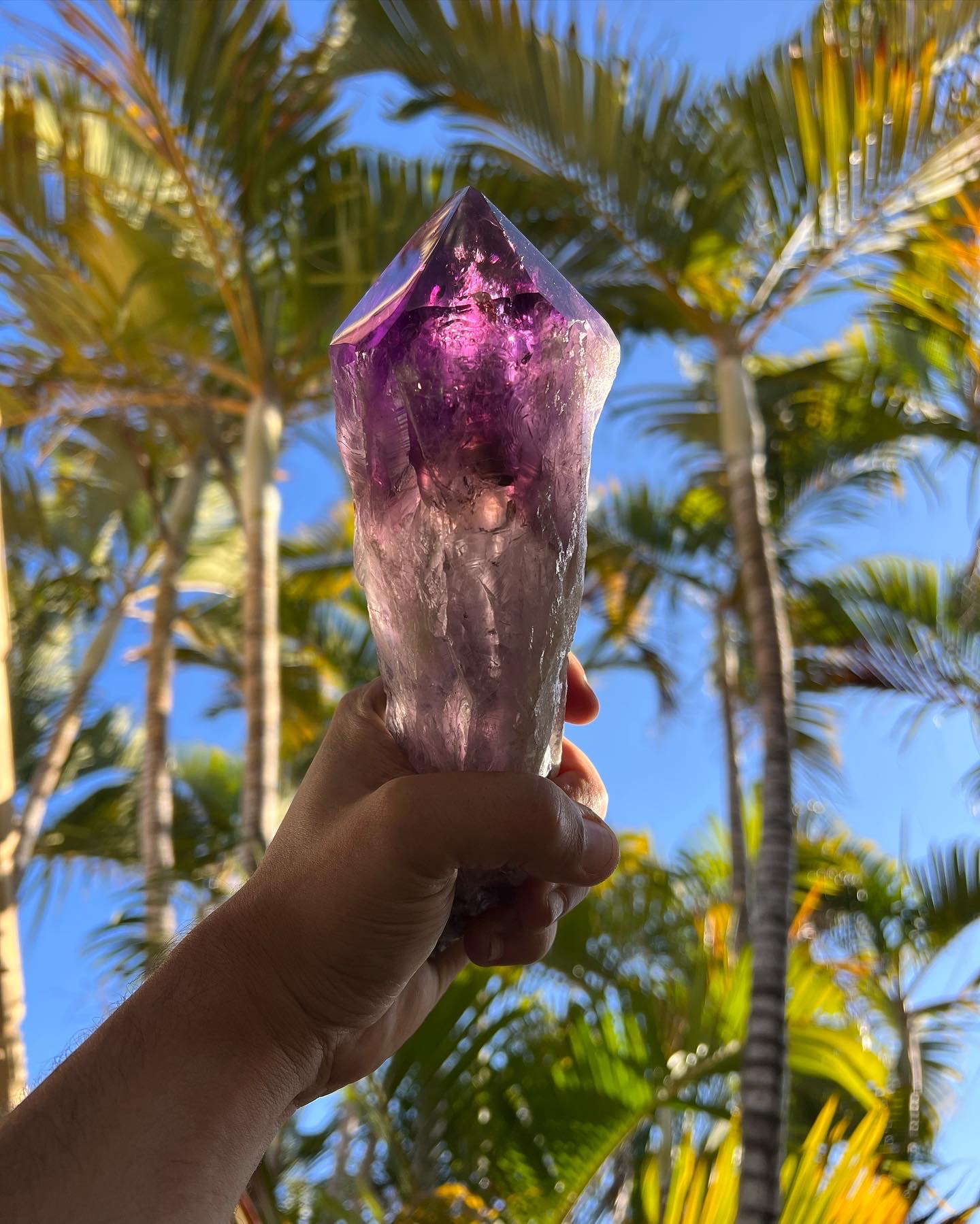
One of the most notable sources of these crystals is the Brazilian state of Bahia. Bahia has long been known for producing exceptional quartz varieties, and in certain mining areas miners occasionally uncover these remarkable elongated amethyst points. Unlike the large geodes found in southern Brazil, the Dragon Tooth material from Bahia tends to appear as individual crystals embedded in host rock or clay-rich pockets. When carefully extracted, the crystals often reveal beautifully preserved natural points with strong color and internal phantoms that are highly valued by collectors and mineral dealers around the world.
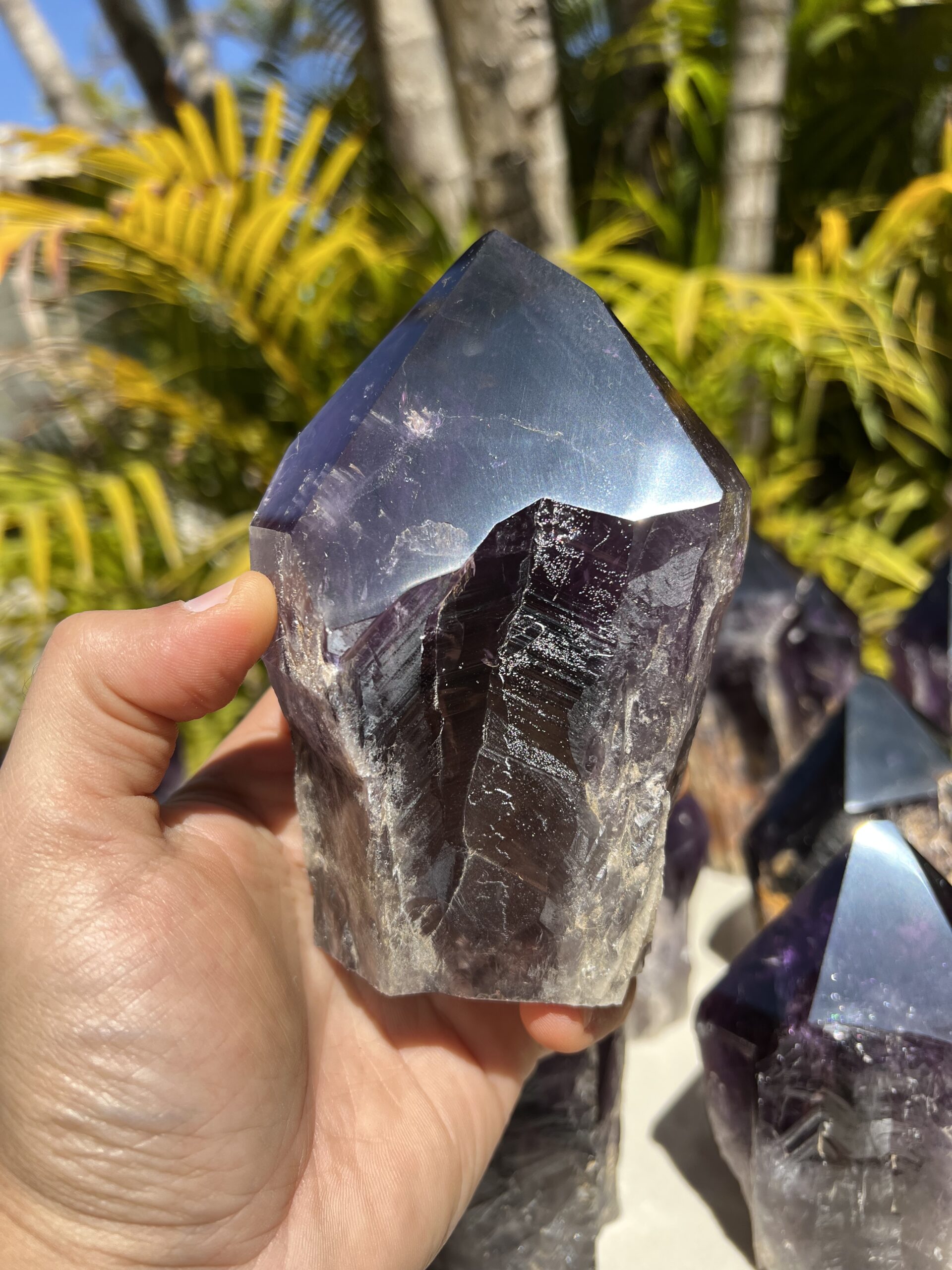
One of the most notable sources of these crystals is the Brazilian state of Bahia. Bahia has long been known for producing exceptional quartz varieties, and in certain mining areas miners occasionally uncover these remarkable elongated amethyst points. Unlike the large geodes found in southern Brazil, the Dragon Tooth material from Bahia tends to appear as individual crystals embedded in host rock or clay-rich pockets. When carefully extracted, the crystals often reveal beautifully preserved natural points with strong color and internal phantoms that are highly valued by collectors and mineral dealers around the world.
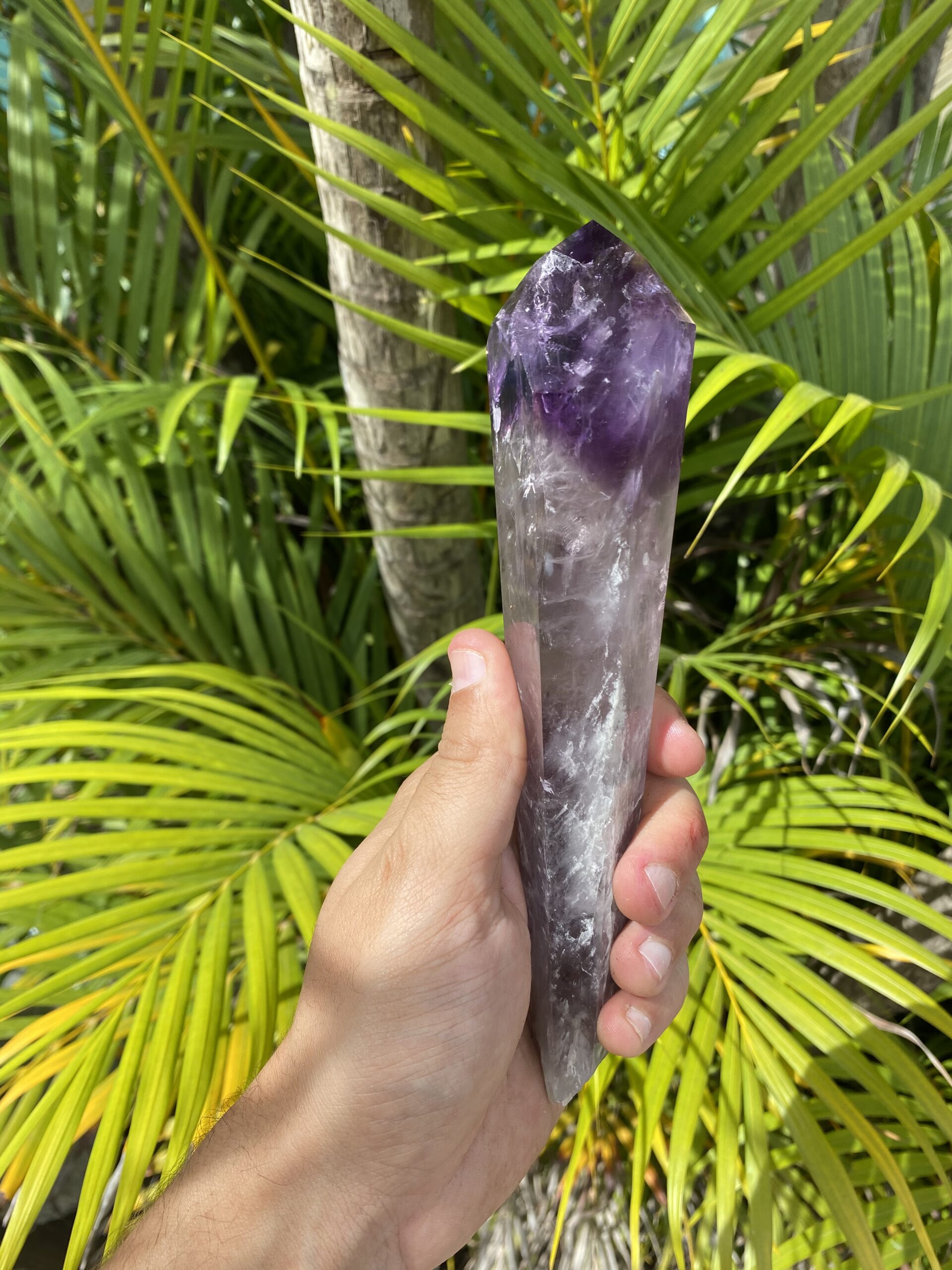
Another popular presentation involves fully polishing the crystal to create what many people call an amethyst wand. When the entire surface is polished, the crystal becomes smooth and glossy, allowing light to travel more easily through the quartz structure. This often reveals internal phantoms and color zoning with greater clarity. The result is a refined piece that still carries the original geometry of the crystal but with a more finished appearance. Depending on the quality of the material, these polished wands can display remarkable transparency and internal structures that make them especially appealing for collectors, decorative use, or specialized markets.
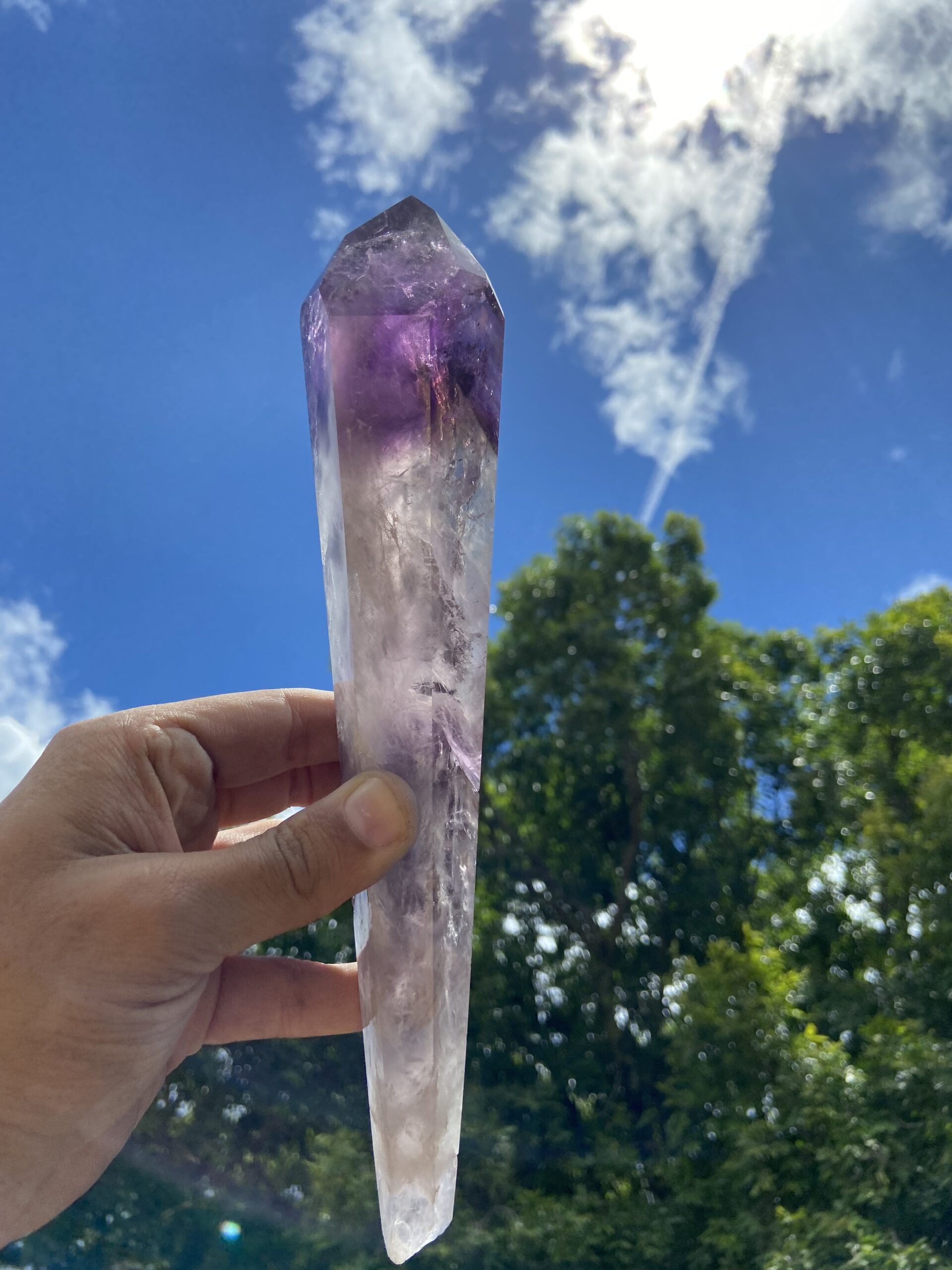
Part of the appeal of Dragon Tooth amethyst lies in this versatility. A single crystal can be appreciated in multiple ways: as a natural mineral specimen, as a half-polished display piece, or as a fully polished wand. Each approach highlights a different aspect of the stone, whether it is the raw geological formation or the beauty revealed through careful craftsmanship.
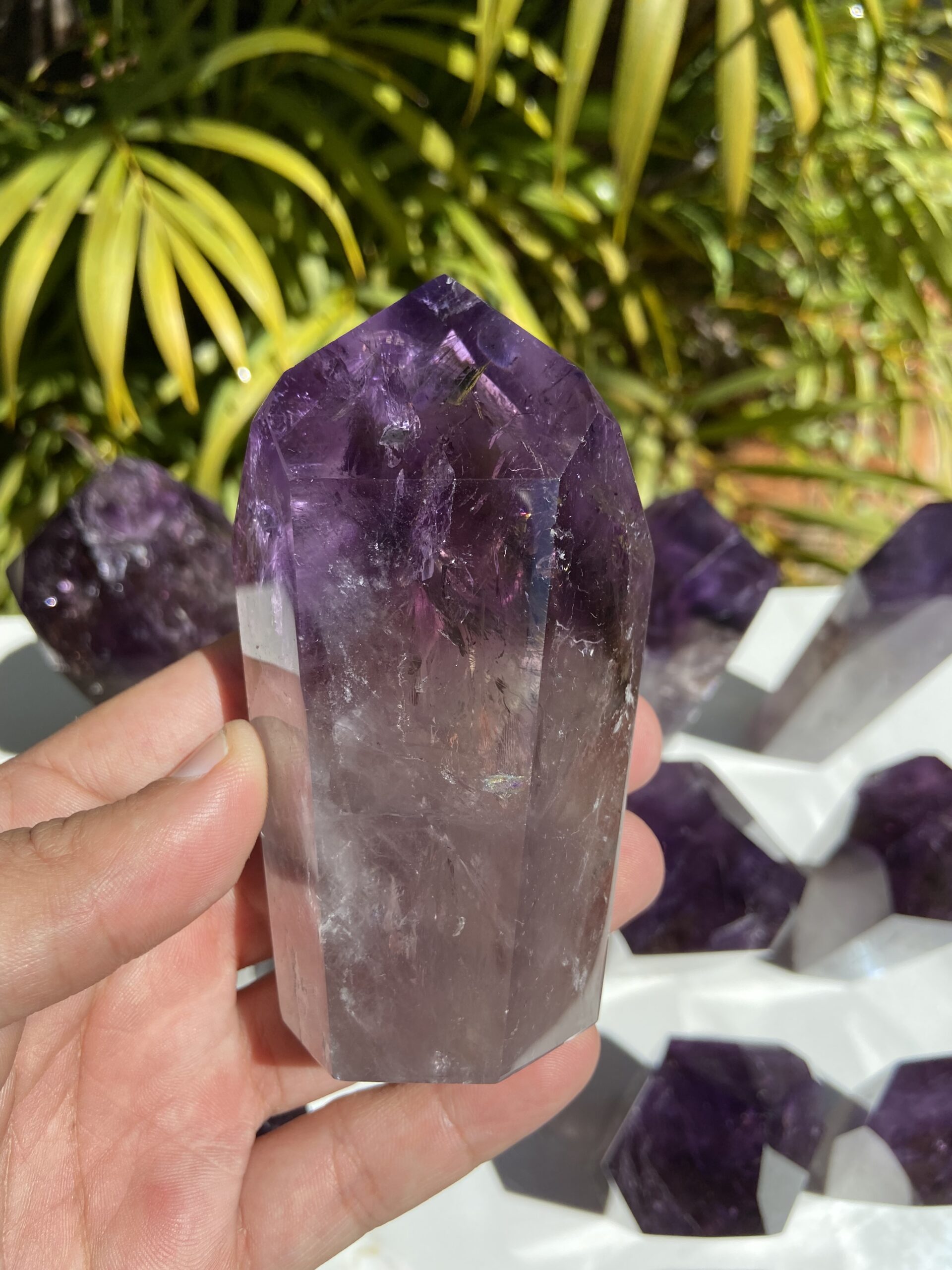
Ultimately, what makes these crystals so captivating is the sense that each one tells a story. The phantoms inside the quartz are more than visual curiosities; they are evidence of the crystal’s growth over immense stretches of time, shaped by the changing conditions deep within the Earth. When a Dragon Tooth amethyst from Bahia finally emerges from the ground, it carries with it a record of geological processes that occurred long before human history. That combination of natural beauty, scientific intrigue, and rarity is what continues to attract collectors and enthusiasts from all over the world.
Discover the most exquisite amethysts from Brazil — click the link below: https://exclusivegemsfrombrazil.com/produto/amethyst-dragon-tooth/